People Are the Heart of Villages
Villages begin with people — individuals who come together with a shared intention to create a place where community, land stewardship and everyday life are deeply connected.
The Work of Relationship
Living in proximity is not the same as living in community.
Intentional villages require:
• Ongoing dialogue
• Structured listening
• Shared decision-making
• Conflict literacy
• Rhythms of gathering
Community interaction must be designed — not left to chance.
Healthy villages:
• Create regular forums for voice and participation
• Build emotional maturity alongside practical skill
• Honour both individual sovereignty and collective responsibility
Without this, unresolved tension becomes structural weakness.
Some key factors of succesful villages
Circular Governance
Conflict resolution
Membership pathways
Contribution & sharing
Whole systems design for co-creating villages
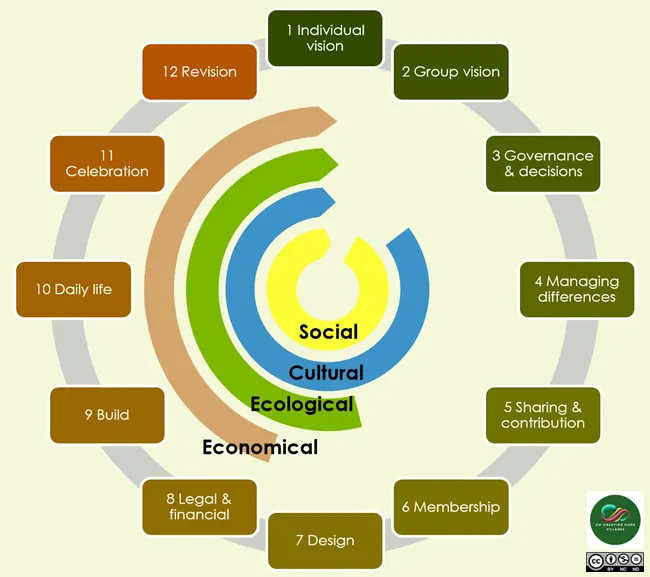
From over two decades of academic research and lived experience of intentional communities by Dr Jason Hilder it became clear that resident led villages are most successful when following a guided process.
That led to the 12 step process based upon regenerative, whole systems design.
This process is replicable to any location or group and forms the basis for village development projects listed below.
The Social Architecture of Collaboration
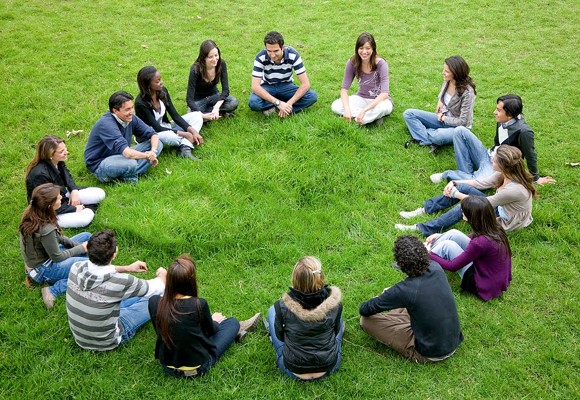
The relational and governance dimensions of village life do not arise spontaneously.
They are practiced, structured and supported over time.
For those wishing to understand the practical frameworks then we offer learning material inThe 12 Steps to Village Formation via our learning platform.
Regenerative villages emerge through the relationship between people, purpose and place.